Katie Henery and I are sitting in the small harbour office, playing musical chairs to find the threads of wifi. Outside, the wind is blowing. Waves with white tops splash onto the walkways and clouds like giant black bowling balls hang heavily above the harbour. We moved onto Sea Dragon yesterday, and settled into our bunks – tightly packed like sardines. Today was meant to be our day of departure, but we have been delayed until tomorrow due to the gale currently ripping across the sea. There is talk of a hurricane on its way up from Bermuda, and we will be speeding ahead of it on our way to the Faroes. Thus we have spent the day provisioning, filling the cupboards with curry powder and cardamom, hot chocolate and honey – although, to the slight disgruntlement of some crew members, coffee we are told is a no-no if we want to hold onto our dinners when the waves are rough.
We are all definitely eager to get going, but we are also not sad to be spending an extra day in Reykjavik. For some of us, our priorities are our chilly extremities. Threatened with long watches on deck, our stocks of socks, gloves and hats are growing exponentially every hour we spend here. For others, like illustrator and fine artist Helen Cann, the extra time is enabling her to top up her collection of local knowledge. She is putting together data to make an artist’s map, describing how people use more than physical geography to locate themselves. Story, dialect, history, economy, science and culture all feature on her maps, as she is interested in how people understand their place – both physical and emotional – in the world. Her focus here is on whales, and yet she has been frustrated by the lack of people willing to open up about how cetaceans feature in Icelandic culture. She has found significantly few nursery rhymes, tales or anecdotes to connect the mountains and glaciers on her map, or simply few people to impart them. The things she has found have been beautiful, but she can do nothing but skim the surface with the few days she has here. An Australian/Icelandic waitress, who served us coffee and fresh beef pasties, spoke of the time she went on a tourist whale boat and saw a whale for less than a second. The harbour master spoke of his grandfather, who could distinguish a whale simply by how it breathed or moved in the water. And there was the chef, who compared the taste of dolphin to marshmallows…
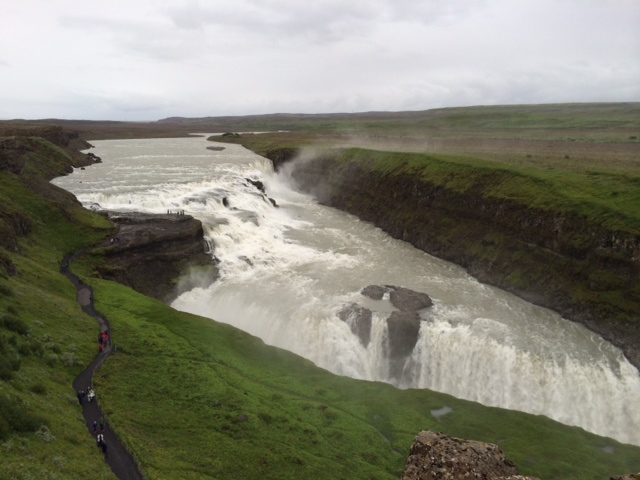
In Reykjavik airport, visitors are guided through customs and coffee shops by old viking sayings. One of them – “It’s a pity we don’t whistle at one another, like birds. Words are misleading” – is my favorite. Words are misleading, and I can understand people not wanting to share their stories with us – particularly when asked about a subject such as whaling – so often coloured (as our tour guide said yesterday) by sentimentality. Here, where the wilderness shouts so very loudly, words seem quieter somehow. Less important. I can imagine my own melting away, driven by the sound of the wind and rock. In Helen’s maps though, her collections of words and drawings are the anchors that connect place to place, person to person, creature to creature. Sea shanties from an Icelandic village are tied, across an ocean, to perhaps a Faroese folk chant or a viking childrens’ tale. And interspersed, there’ll be the bird whistles and the whale music, the sea squids and the selkies. The wild earth, flowing amidst and amongst all the rest.
– Laura Coleman, Director of the ONCA Trust, July 5, 2014
This post originally appeared here, on the Sea Blog for ONCA | One Network for Conservation and the Arts. Photos by Laura Coleman.