Archive for April, 2011

Wayward Galapagos Tortoise Traces Sea Dragon Route

Wednesday, April 27th, 2011 by Ron

We all went to the beach on Friday; it was like any other; white sand stretching for miles, palm trees above the tide line, native birds circling curiously overhead, blazing sunshine and tropical waters. Well at least like all the others in this area of the Pacific, it was also deserted. Uninhabited Henderson Island is a UNESCO world heritage site and there was no-one else there, not even many fish.

Earlier today we left Pitcairn, an island oasis jutting out of the Pacific rich with flora, fauna and history. Hungry and without food whilst exploring ashore a lone giant Galapagos Tortoise eating bananas showed us the answer, he seemed to be surviving rather well on them having involuntarily sailed 2,700 Nautical miles a few decades ago from the Galapagos Islands.It is hard to comprehend what possessed someone to pick-up a Giant Tortoise put him on a yacht, and sail across a vast ocean to relocate him. But then again when we look at things rationally with a logical, humane and practical approach it is hard to comprehend so many of mans actions. Pitcairn for so many centuries famed as the refuge of the most famous group of mutineers ever, in recent years has caught the world’s attention for less heroic actions. An island paradise; exposed, divided, a community struggling to survive, adapt and preserve a way of life far away from the world’s media scrutiny.

It is too easy to turn a blind eye, who will take responsibility for the threats facing our oceans; acidification, plastic and chemical pollution, depleted fish stocks, rising water temperatures, coral bleaching; the life source of our planet is threatened. There comes a point with all things when reality needs to be faced; Pitcairners are doing that slowly, painfully. The oceans covering the vast majority of our planet are out of sight, largely unclaimed international waters that no one nation is responsible for and yet increasingly we are all being made aware of the crisis over the horizon and so all need to take action.

On Henderson Island there was clear evidence of all of these issues on one remote ‘pristine’ South Pacific beach.

Clive

DIVING-POLLUTION-ISLANDS-TOURISM

Monday, April 25th, 2011 by Emily

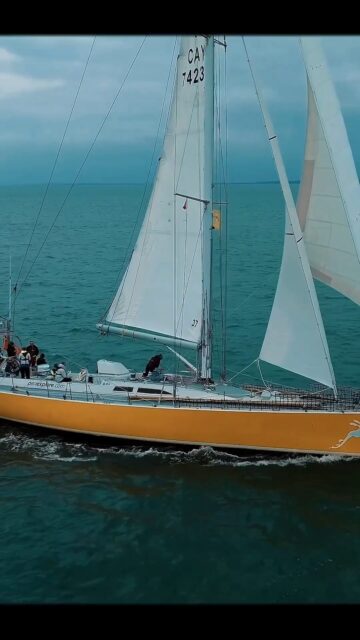
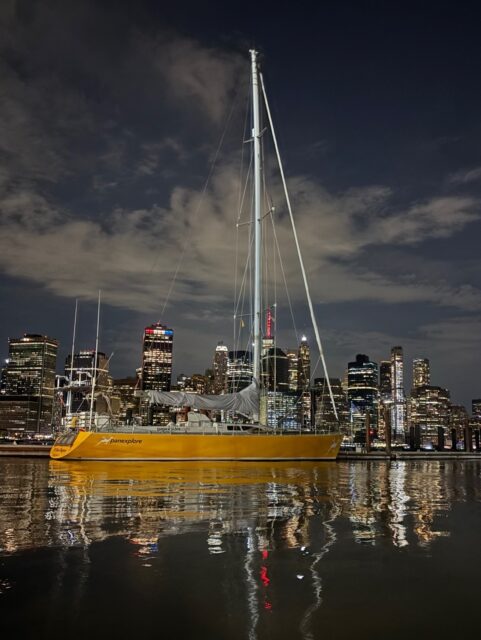
From the steamy jungles of Brazil, the wild wind ravaged coasts of South Africa, Shifting sparkling sands of Namibia, Isolated Island Nations, Fluvial waters of South America, Groaning Glaciers, Freezing Fiords, to the Magically clear blue of the vast Pacific and it’s thousands of Island Paradises. It’s been an incredible magical journey of almost 20000 nautical miles aboard the mighty Sea Dragon.

She has performed impeccably with the minimum of maintenance in the small amount of downtime and tight schedules we’ve been keeping on this 5 Gyres/Pangaea Explorations Expedition. We have weathered storms, huge seas, calms, extreme heat, freezing cold and various equipment failures. But we’ve managed to patch and repair to make our destinations safe and sound, repair what’s needed to be done, new crew and away we go, powering into the sunset.

Over 75 new crew have had the Sea Dragon experience, everybody has taken away different feelings of life at sea, of the issues we are trying to study and life in general. A mix of scientists, activists, writers, film makers, a bit of everything, all sharing our knowledge, all world citizens.
It’s a great moment to let go, live in a closed community 22m x 5.5m for a period of time-sharing all the chores necessary for life aboard. No lattes or Wi-Fi but plenty of fresh air, stars, amazing sunsets, sunrises, moon gazing and feeling the power, beauty, changing moods and energy of the ocean first hand.

It is in this beautiful ocean that we have been trawling for thousands of miles that we’ve found littered with a soup of small plastic fragments and every type of floating plastic flotsam, barrels, nets, hardhats, toilet seats, shopping bags, caps, bottles etc. Some has come direct from land, the majority of larger items I would imagine from the fishing vessels that are indiscriminately and systematically raping our oceans of its natural resources.
We’ve seen hundreds of oil rigs with their burn off flames from miles away, calamari fishing vessels in groups of 20 every 50 miles for hundreds of miles burning brighter than any city, huge fishing vessels in dry dock for 3-5 days downtime and back out again to continue fishing as much as possible, out of control shark finning only to throw the still live bodies back to the ocean, or for their teeth to make souvenirs. We’ve caught kilometer long illegal drift nets in our keel, gone ashore at Unesco protected islands in the middle of nowhere with the beaches covered in fishing nets, floats, bins, bleach bottles with fish tooth marks. Had our anchor drag only to pull it up covered in plastic shopping bags.

Underwater is another story. I’ve had the opportunity to dive thanks to Sherwood in some of the most remote places on the planet. Ascension Island was incredible, and unique in that it was teaming with an abundance and variety of large fish. Being that it is a US and British Military outpost equipped with Radars I would imagine fishing boats don’t get to close, the 200-mile EEZ (Exclusive Economic Zone) doesn’t mean much to most boats if they can get away with it. Other islands aren’t so lucky.

Smaller nations, or nations with huge coastline that don’t have the resources to control their waters are constantly being illegally fished, we’ve been told of islanders seeing the lights from the fishing boats at night and in the day no sign of them.

In the remote Rapa Nui (Easter Island), the most remote inhabited place on the planet we dived with high expectations only to see very few fish and then to later learn that in only in the last five years from 160 types of fish grouped in 65 families there is only a third remaining, staggering, mind blowing. What’s happening?

In Lanzarote in the Canary Islands where I live the population has more than doubled in twenty years. Once empty dive sites are now full of divers, all the huge grouper are gone, sold to some tourist restaurant with a spear gun hole in the head.

The rubbish dumps are overflowing due to so many people, all consumers. Excess plastic bags blowing into the ocean. Rubbish everywhere. This a World Biosphere Reserve.

So, in my opinion a combination of tourism/fishing/overpopulation and exploitation is destroying island paradises. We’ve seen a trend in all the islands we’ve been to. Everyone is different with their own charms and qualities, their own issues, with waste management, but at the end of the day, the excess of one use plastic going into land fills and into the ocean is making everywhere the same.

We get used to seeing plastic on the beach, in the water, nowhere escapes it, something needs to be done and done now, individually stop buying plastic, recycle, have a look and see what really happens to your rubbish in your community. Collectively, make a noise.

We need to implement Marine Reserves all around the world, if the fish stocks have any chance of surviving and replenishing they need to be protected.
Diving today was beautiful on Pitcairn Island, we had one lonely old huge jack fish with a sad face a meter or so long accompany us as we drifted around the pristine coral reef.  I swear he had a tear in his eye.

Arrival to Pitcairn Island

Saturday, April 23rd, 2011 by Emily

Pitcairn IslandNews just in!  The team have anchored off Pitcairn Islands… what will they find??

Parallel universe

Tuesday, April 19th, 2011 by Emily

WGalleyThe intensity of life at sea is such that relative strangers living for weeks in the space of a small urban apartment, with lounge/ diner, kitchette, two bathrooms, utility, office area, closet and bedroom, (with fourteen beds) oh and a roof top terrace with extensive panoramic views, get to know one another and themselves rather well. Mostly for the better, but occasionally the worse whether they want to, or not.

Already over two-thousand miles into the Pacific Ocean and headed deeper for one of the remotest places on the planet and last remnant of the British Empire, the temperature is rising. Like an army with nothing to do active minds plot activity, channelled correctly it is all conquering. Beyond our simple daily routine of watches with duties around cooking, cleaning, maintaining and scientific work, we have little to conquer; we proactively occupy ourselves with exercise, reading and conversation, a simple but satisfying life.

Bound for Pitcairn Island, Captain Bligh and his mutinous crew aboard the Bounty are referenced. Many things have changed in the centuries since then, but human nature is much the same, active minds and restless souls, active minds and restless souls that took a ship striving for change and a better life. They found it on Pitcairn, an island oasis far from their homeland; another world, new community, opportunities and a fresh start.

At sea solitude, simplicity and companionship replace high speed connections, on demand activities and time pressures, and for most it is enlightening. However, once landfall is made this all evaporates, the bubble bursts; the desire to reconnect is over-whelming; normal, complex life returns, the view of a parallel universe and another way to live becomes a memory but one from which we can learn.

Stripped bare life is simple and our needs are few, less is more and yet so often we are duped into consuming. We could live as stronger communities, why not? Shared resources, bartered goods a new sense of belonging. At sea, away from the social, norms, networks and pressures I know that it works and has done for centuries.

Clive Cosby

The new “Pants Trawl”

Friday, April 15th, 2011 by Emily

IMG_0522
IMG_0539What if we could double our efficiency by trawling with two nets at the same time?  What if those two nets were attached in some way?  These questions caused us to take off our pants.  Introducing….the PANTS TRAWL!  Seriously, this trawl was a way that we kept ourselves in good spirits.  When you spend weeks at sea there is often very little to do.  It’s important to maintain crew morale with a few jokes here and there.  Anna juggling oranges while wearing the Pants Trawl helped us to have fun with our time and have a good laugh.  But who knows, it could be a new and useful invention!

Dr Marcus Eriksen www.5gyres.org

Trusted Wisdon

Friday, April 8th, 2011 by Emily

The forecast shows a pleasant fifteen knots of wind from the North backing to the South-West overnight, we have seen sustained winds over thirty-five knots. Food is off the menu, various anti-nausia medicines and bunks are sought.

What had looked like a pleasant sail and evening landfall has turned ugly, a reminder that as ever nature is in control out here, and that the wind speed predictions are only read by mariners. How things turn, from glassy seas and swimming two days ago followed by a perfect Green Flash sunset to a grey heaped ocean and cloud filled skies. We over-rely upon technology and forget trusted wisdom; a barometer has never lied, information fed from a super-computer on a far away continent can never replace that.

Easter Island is our next landfall, once home to an ancient civilisation that built the Moai before dying out. Theories to explain their disappearance vary; introduced disease, de-forestation, over-population, resource depletion, whichever theory holds true a people who achieved something amazing vanished leaving many questions unanswered, in lieu there is much to be learnt and clear parallels on a modern-day global scale.

Ever present on board are concerns over our own resources; fuel, food and water, basic necessities to survive and sustain a crew, they are all both finite and scarce. Two weeks ago off the coast of Chile with a broken water maker we were faced with returning to port, an eleventh hour repair utilising an improvised relief-valve averted this – thoughts of our vulnerability were at the fore. Similar threats globally are too often less at the fore.

As the wind now eases I am reminded that in my experience a weather forecast is always right, it is just that the timescale is often wrong – there is still hope for a pleasant landfall.

High times and clean seas

Tuesday, April 5th, 2011 by Emily

IMG_0294

Another glassy morning, water slick and still, with an almost oily sheen indicative of these ocean dynamics. We’re in a high pressure system, about 600 miles from the center of the accumulation zone. Light, variable winds force us to motor along, occasionally grabbing ahold of opportune gusts to shut off the engine. There’s nothing like the quiet peace of gliding along under sail only.

Today’s research was a repeat of yesterday – trawls mostly filled with tiny Portuguese Man O War, VelellaVelella, juvenile Myctophids, and translucent crabs. We’re running the high speed trawl continuously, stopping twice a day to deploy the manta trawl, and for Garen to conduct his research – more about that tomorrow.

Along with our barometer, spirits are also sky high. After tonight’s dinner – vegetable wraps with handmade tortillas, roasted onions and garlic, and a peach cobbler – we capped the evening with a round of recited poems, songs, a hilarious Scottish eulogy by Charlie (not a word of which was intelligible) and a sunset bagpipe serenade on the Sea Dragon’s bow. 6 or 7 cameras were immediately on hand to capture the moment. Its difficult to find words to describe how wonderfully incongruous both the sight and sound of this are….I’m fairly certain having a skilled bagpipe player on board a research expedition to the South Pacific Gyre is a first.